

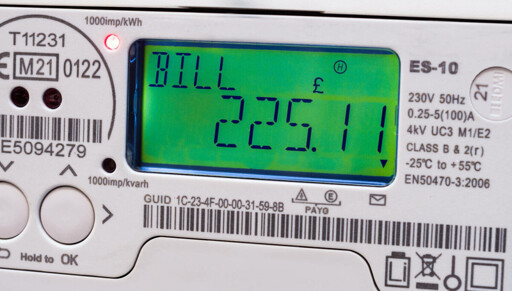
modular designs prevent this, but nowadays everything must be evil
Modular? Never heard of her… The only thing we have is ✨proprietary✨.
Utility meters last for decades. Making them reliant on a cell network that’s constantly changing wasn’t such a good idea. They should have licensed some low band UHF frequencies and set up their own network. It doesn’t take much bandwidth to read some meters.
It would’ve made sense if the Meters were made modular with a removable antenna/mobile data modules - rather than having to replace loads of perfectly functioning smart meters because the energy companies wanted to save a few bob 20 years ago.
They did that for the second gen meters.
"The first covers newer, second generation (SMETS2) meters, where only the communications module needs swapping out, but even this is likely to cost £1.3 to £1.4 billion (c $1.7 to $1.9 billion) before the hardware cost of each new hub is even factored in.
The other is for an estimated 7 million older, first-generation (SMETS1) meter installations, which have the cellular comms hard-wired in, so the whole meter typically needs replacing. The report authors estimate this will cost another £2.1 billion to £2.45 billion ($2.8 billion to $3.3 billion), at an indicative replacement cost of £300 to £350 per installation."
That would’ve the smart choice.
They also could’ve designed all of this to work as a mesh network so they aren’t reliant on anyone elses network.
Yes mesh networks have their flaws but they probably only need to check each meter once a month and it’s probably just a MAC address and text. So speed and having the device constantly connected isn’t necessary.
I would think this is a perfect job for lorawan?
LoRa can get saturated pretty easily so some careful planning might be needed, but it’s certainly an option if the city has the money and resources to deploy all the gateways.