One thing I’ve been wondering about, after seeing an article a while back about Nvidia talking to TMSC about manufacturing memory is whether they might do an ASIC aimed at being a neural net or part of one.
The limiting factor today is memory bandwidth. But that’s because you have to ship all the data over a long, narrow memory bus with big fat traces.
If you can stick a bunch of adders and multipliers on a single chip and put memory on the same chip, then you don’t have to slow things down and generate the heat that shipping everything off-chip requires.
If so, that might be one form that AI-optimized memory might take.
Nah, Groq is toast. Those numbers are for toy models distributed across tons of cards, and splitting MoE LLMs across so many cards in SRAM an inefficient approach IMO.
Which you can get with Deepseek, Muse or other open weights models these days, if you really need it.
The only ASIC maker I kind like is Cerebras, especially their scheme for hybrid inference in conjunction with AMD. Architecturally, that makes a lot of sense.
EDIT:
Upon further investigation, they host more models than I thought:
Yep. Samsung is already researching this. They have been for some time.
Also, I feel Bitnet would be useful here, as it would only require small adders, no huge multipliers.
They could even take a hybrid approach, processing higher-precision attention and small parts of the LLM on the GPU ‘traditionally’ while specialized adders in memory handle the huge ternary MLPs (or whatever the sparse equivalent is in other ML architectures). This would also give them architectural flexibility (as attention schemes are evolving wildly, the MLPs kinda aren’t).


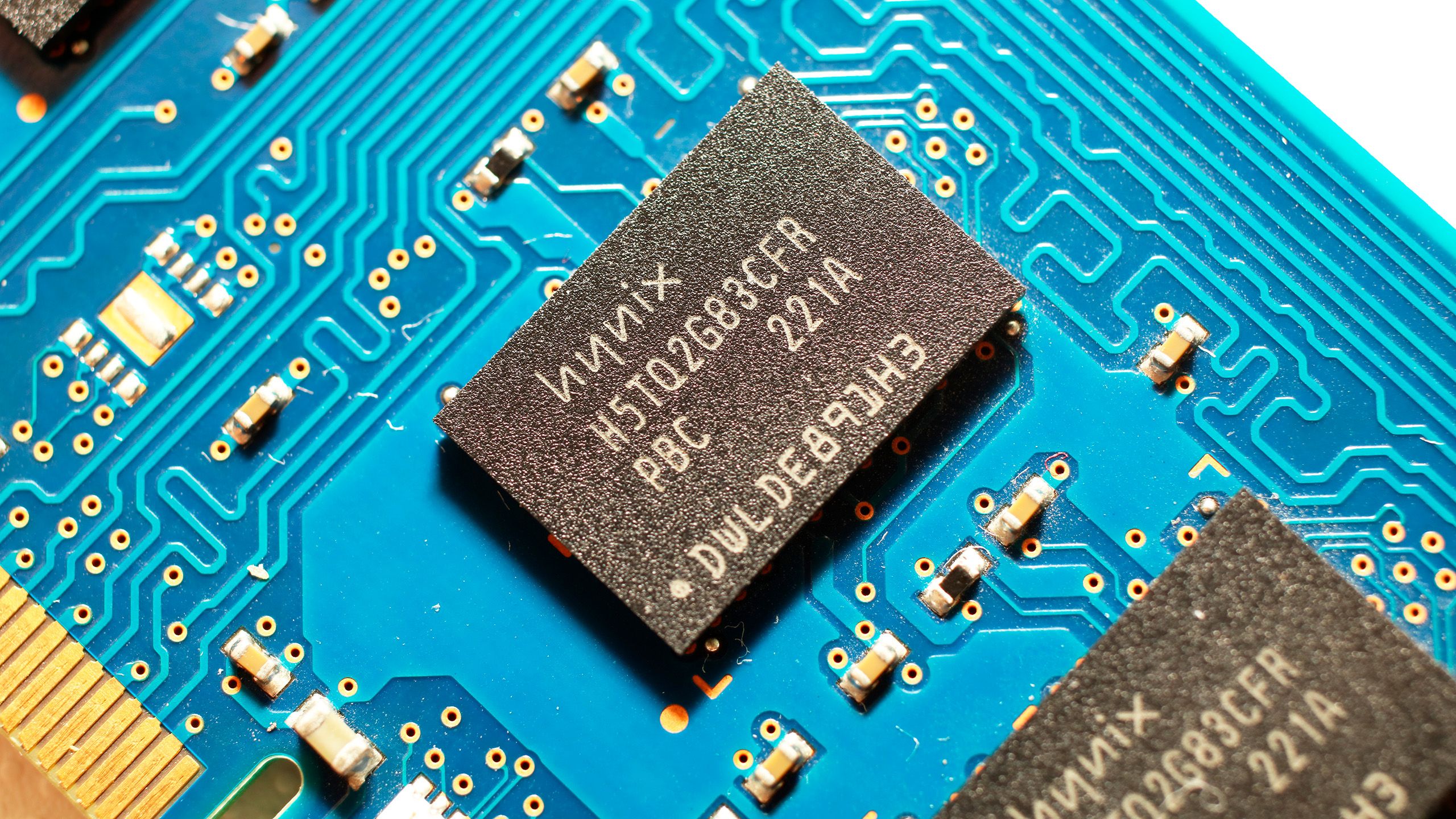
One thing I’ve been wondering about, after seeing an article a while back about Nvidia talking to TMSC about manufacturing memory is whether they might do an ASIC aimed at being a neural net or part of one.
The limiting factor today is memory bandwidth. But that’s because you have to ship all the data over a long, narrow memory bus with big fat traces.
If you can stick a bunch of adders and multipliers on a single chip and put memory on the same chip, then you don’t have to slow things down and generate the heat that shipping everything off-chip requires.
If so, that might be one form that AI-optimized memory might take.
Nvidia bought GRoQ for exactly this. 13,000 tokens a second from an expansion card that uses 200 watts. AMD bought Taalas for the same reason.
Nah, Groq is toast. Those numbers are for toy models distributed across tons of cards, and splitting MoE LLMs across so many cards in SRAM an inefficient approach IMO.
The best model they serve is the kinda obsolete GPT-OSS 120B, at 350 token/s: https://openrouter.ai/openai/gpt-oss-120b
Which you can get with Deepseek, Muse or other open weights models these days, if you really need it.
The only ASIC maker I kind like is Cerebras, especially their scheme for hybrid inference in conjunction with AMD. Architecturally, that makes a lot of sense.
EDIT:
Upon further investigation, they host more models than I thought:
https://console.groq.com/docs/models
They have MiniMax 2.7 at 200 tokens/s, which isn’t too bad… but still largely obsolete now.
Yep. Samsung is already researching this. They have been for some time.
Also, I feel Bitnet would be useful here, as it would only require small adders, no huge multipliers.
They could even take a hybrid approach, processing higher-precision attention and small parts of the LLM on the GPU ‘traditionally’ while specialized adders in memory handle the huge ternary MLPs (or whatever the sparse equivalent is in other ML architectures). This would also give them architectural flexibility (as attention schemes are evolving wildly, the MLPs kinda aren’t).