
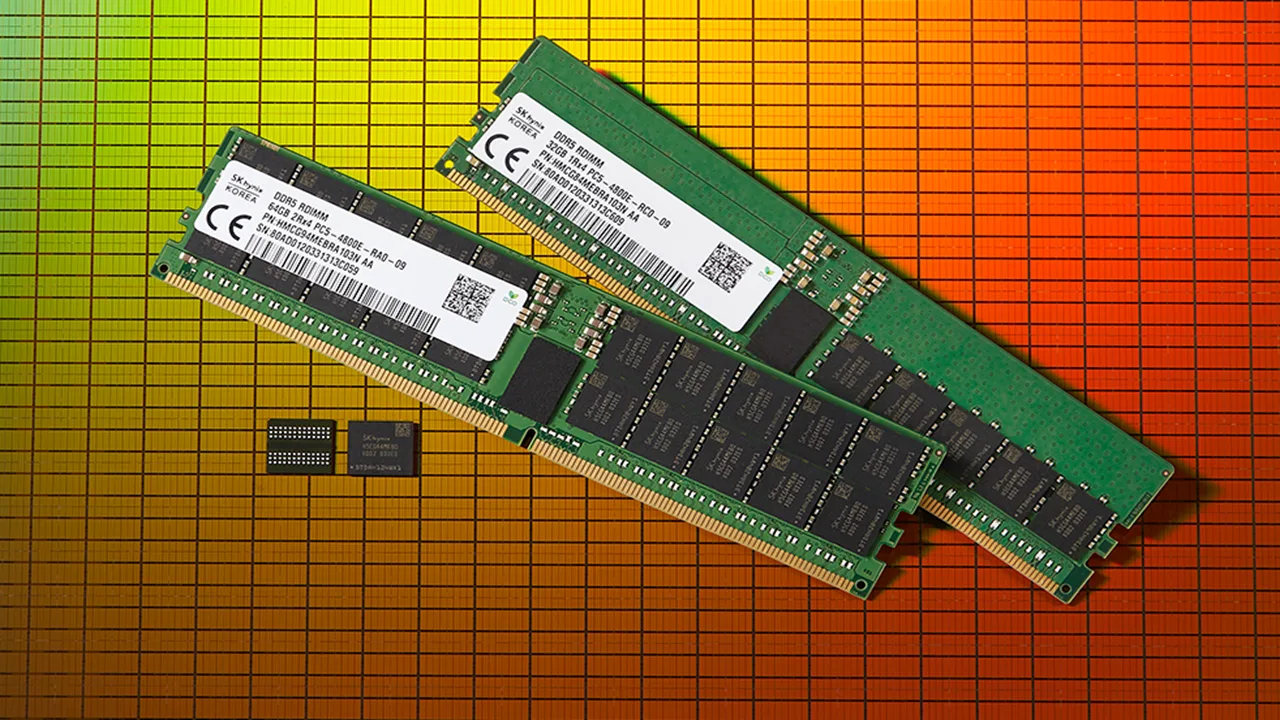
Most of 2026 went by with inflated prices for DDR5 memory, SSDs, and GPUs but next year may finally bring relief from gamers and tech companies producing consumer electronics, at least according to one market analysis report on SK Hynix coming out of Seoul, Korea. BNK Investment & Securities analyst Lee Min-hee shares a detailed […]
Sorry, wot m8?
The Precision T7920 has 12 slots for RDIMMs across 4 banks that service 2 CPU’s, I ought to know as I upgraded mine personally with 4 64Gb pieces.
And in case you’re talking about the datacentres: I’ve worked in a datacentre, and continue to service higher-end servers for clients. As in, stuff that ran into the multiple tens of thousands of dollars even before the RAMpocalypse. I have actually worked on big iron, on blade servers and the like. All of this RAM is in slots precisely because it is meant to be upgradable or replaceable.
The only place where I have seen RAM soldered to the motherboard has been on mobile machines like laptops and phones where space is very much a concern (and where even SODIMM slots are too much of a space hog), and in Apple devices purely to soak consumers for more up-front costs and forced upgrading.
You look at any rackmount or blade server, and slots are the default. I would be shocked if there was ANY manufacturer on the planet making server-class boards with soldered RAM.
Super-proprietary systems for super-specialized or ruggedized applications, fine. A server on a big rig or on a manufacturing floor needs soldered-on RAM because it can’t vibrate its way loose like normal RAM can.
But anything you plug a GPU into for AI work, especially when coddled in a vibration-dampening rack in a cushy datacentre? Sorry, no.
Soldering RAM on-board is a supremely stupid idea for a server, and flies in the face of requirements that include maximum uptime, easy upgradeability, simple and powerful cooling options, and trivial fault replacement.