

I haven’t seen people talk about this at all, so thought I’d share this article about it. For those depressed that no one will actually understand the RH Proof: we have another, entirely human proof which means there are humans who understand it. It might have been overshadowed, but assuming it ends up working out (I have heard there have been some problems found, hopefully they are surmountable) then I think it will be the far more impactful result.
“It gives an “answer”” is doing a lot of heavy lifting. It might as well be just a nonsense tautology circular reasoning shaped into an incomprehensible spaghetti of Lean, with some millenium problem title slapped on top.
For all intents and purposes, especially after multiple such “proofs” have come out, each “new AI proof” should be titled “AI generated spaghetti that might have some insights on <…> if somebody actually paid a human to review it, as much money as they paid their AI bill”
(We have the Lean, and it’s pretty easy to spot dishonest Lean code of the kind you describe. There are literally hundreds of clever folks who would be quite famous if they could show any major AI Lean proof was ‘proved’ by cheating. I’m not aware of a single case.)
Just as a note, and falls in line with the idea I purported in original comment:
Navier Stokes “proof” is still essentially useless and unaccepted.
That is why, I think, the title rename I proposed is more than valid.
Addendum: This is definitely a meta-consideration idea, that attacks the source of information, not the article itself. However, with these AI proofs there is no other way with this innundational flow of spaghetti… As was the case immemorial with other institutions that printed papers and diplomas more than they cared about the content…
AI companies should really learn the process of peer review and publishing, and maybe even understanding what they did in its entirety. Or will hopefully be forced to learn the hard way.
That is, if they even care about science and not some mystical IPO money printer…
I mean, they explicitly only care about mystical IPO money printer.
I read that many of the proofs recently created by OpenAI fall into that category. Supposedly, after mathematicians looked at them they found that many didn’t actually prove what they claimed they did. I don’t have a source though, so unsure if true.
You may be recalling the Hodge papers that got recalled. They had no lean proof, and it was 3 of them out of 700+.
It matches the open source mathlib reference that is the benchmark for testing the proof. 100 000 lines of code for a tautology would be impressive.
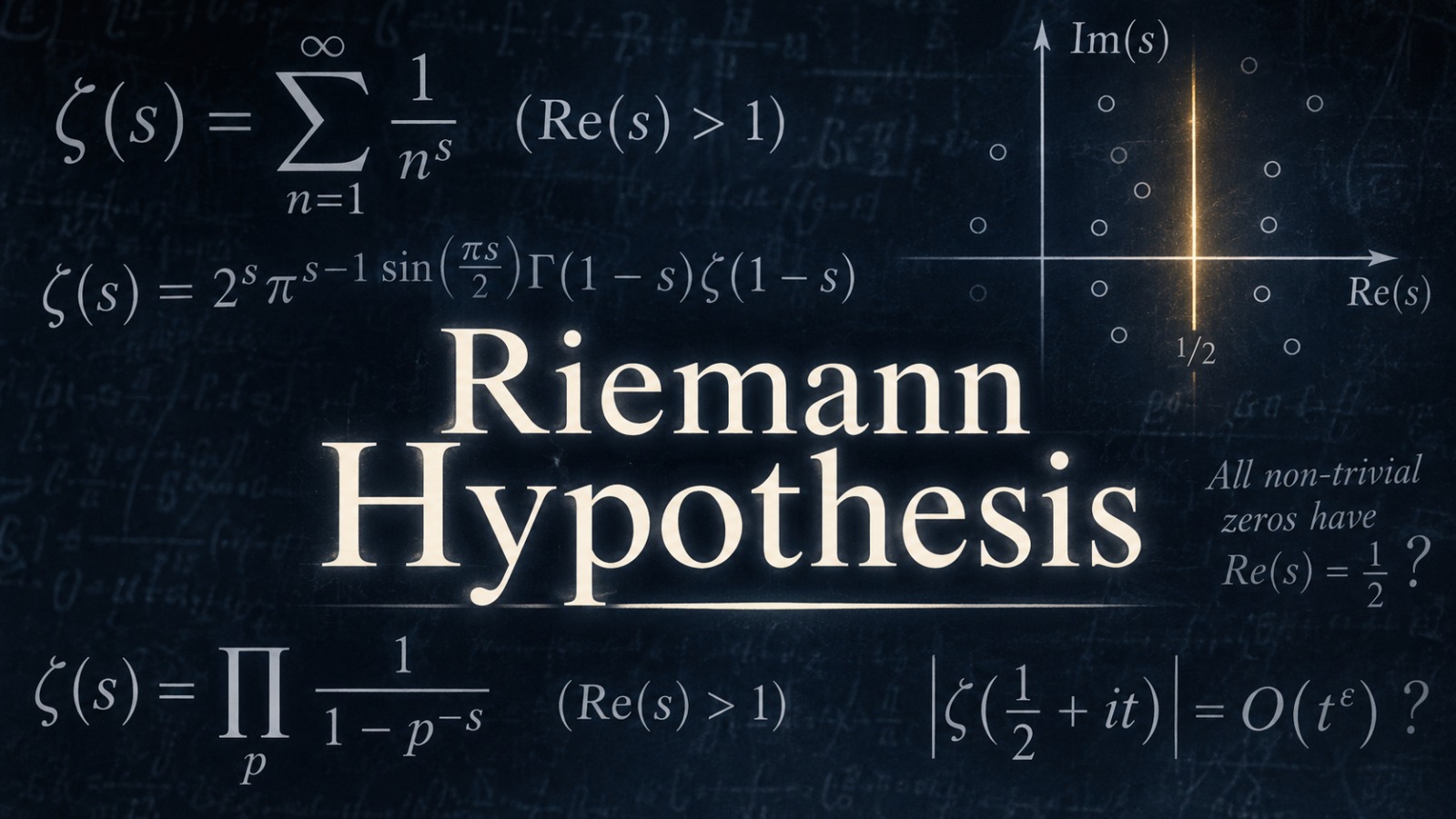
The AI essentially pulled the classic “we know where zeroes are because we know where they aren’t”. It first proves that no zeroes exist for s>1/2, then takes a reflexive function to prove the same for s<1/2. Therefore, all nontrivial zeroes must have s=1/2 as the real part.